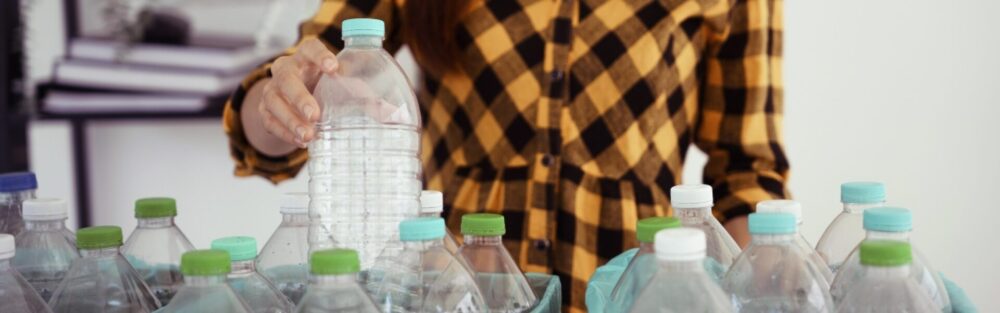
Iranpolymer/Baspar Recyclability as the key to the circular economy: A reform of Section 21 of the German Packaging Act could ensure that ecological packaging is consistently preferred. Financial incentives and objective criteria play a key role in changing the market in the long term.
Mara Hancker, Managing Director Communications at IK Industrievereinigung Kunststoffverpackungen e.V. (German Association for Plastics Packaging and Films), explains in an interview why these measures are urgently needed.
How do you rate the current provisions of Section 21 of the German Packaging Act with regard to financial incentives for recyclable packaging and what would you want to change?
Mara Hancker: Anyone who takes climate protection and the circular economy seriously should take recyclability into account when calculating license fees. We support the call of the Conference of Environment Ministers (German: Umweltministerkonferenz) for a reform of Section 21 of the Packaging Act and an eco-modulation of license fees. Recyclability should become a “must-have” requirement for all packaging, and this should also be financially supported.
Are the existing financial incentives strong enough to offset the costs of switching to recyclable packaging? What still needs to be improved?
Hancker: We are concerned about the increase in fiber-based composite packaging, which is difficult to recycle. There is often greenwashing behind this: plastic packaging is supposed to be replaced by seemingly more ecological materials. However, consumers are hardly aware of the lack of recyclability of this packaging. The reform of Section 21 would be an effective measure to put a stop to the evasion trend on the market. The reform aims to put recyclable and ecological packaging in a better financial position than other packaging when it comes to licensing – according to objective criteria and regardless of the material of the packaging.
Which technological advances or materials do you see as key factors for improving the recyclability of packaging?
Hancker: In 2023, 82% of all household plastic packaging, including beverage bottles with a deposit, was recyclable or reusable. And since 2016, the amount of non-recyclable packaging has fallen significantly from 521 kt to 355 kt. Among other things, the increased use of innovative barrier technologies and the switch to mono-material composites are contributing to the positive developments. The biggest challenge is the lack of recycling paths, particularly for PET trays and niche plastics such as the basically recyclable mono-material EPS. This is followed by material combinations that are incompatible with recycling and a lack of sorting and separability. Further market developments are to be expected here in the coming years.
Recyclate use in packaging: Figures, targets and challenges
What is the current market share of recyclates in packaging and what measures could further promote their use?
Hancker: The use of recyclates has risen by 24% to 580 kt since 2021, particularly due to an increase in post-consumer recyclates (PCR). The proportion in plastic packaging rose from 11% to 15%. However, the target of one million tons of recyclates by 2025 will not be achieved. Greater cooperation between policymakers, industry and consumers as well as better collection, sorting and design for recycling are necessary to achieve the target.
On 27.11.24, the EU Parliament passed the European packaging regulation PPWR. What specific challenges and opportunities do you see for the packaging industry as a result of this new regulation?
Hancker: The PPWR sets the framework for a common internal market, incentives for the use of recyclates and reusable applications. We welcome this, as plastic packaging that uses fewer resources is already a sustainable choice today. However, many of the regulations on packaging bans, reusable quotas, recycling requirements and use quotas for recyclates only apply to plastic packaging or provide for exemptions for other packaging materials. This encourages a shift towards thicker and heavier packaging materials and therefore more packaging waste and more CO2 emissions. This does not make ecological sense.
Visions of the packaging industry: sustainability, recyclates and smart packaging
What do you think the packaging industry of the future will look like?
Hancker: The future of the plastic packaging industry will be shaped by trends such as optimized design for recycling, a shift in the raw material base away from fossil-based virgin materials towards recyclates and more climate-friendly production processes. Our industry is investing in innovative recycling technologies and new materials. The proportion of bio-based plastics and the use of reusable systems will also increase. However, increasing recyclate quotas remains a challenge that we must tackle with vigor. Smart packaging is also becoming a growing trend.
k-online